
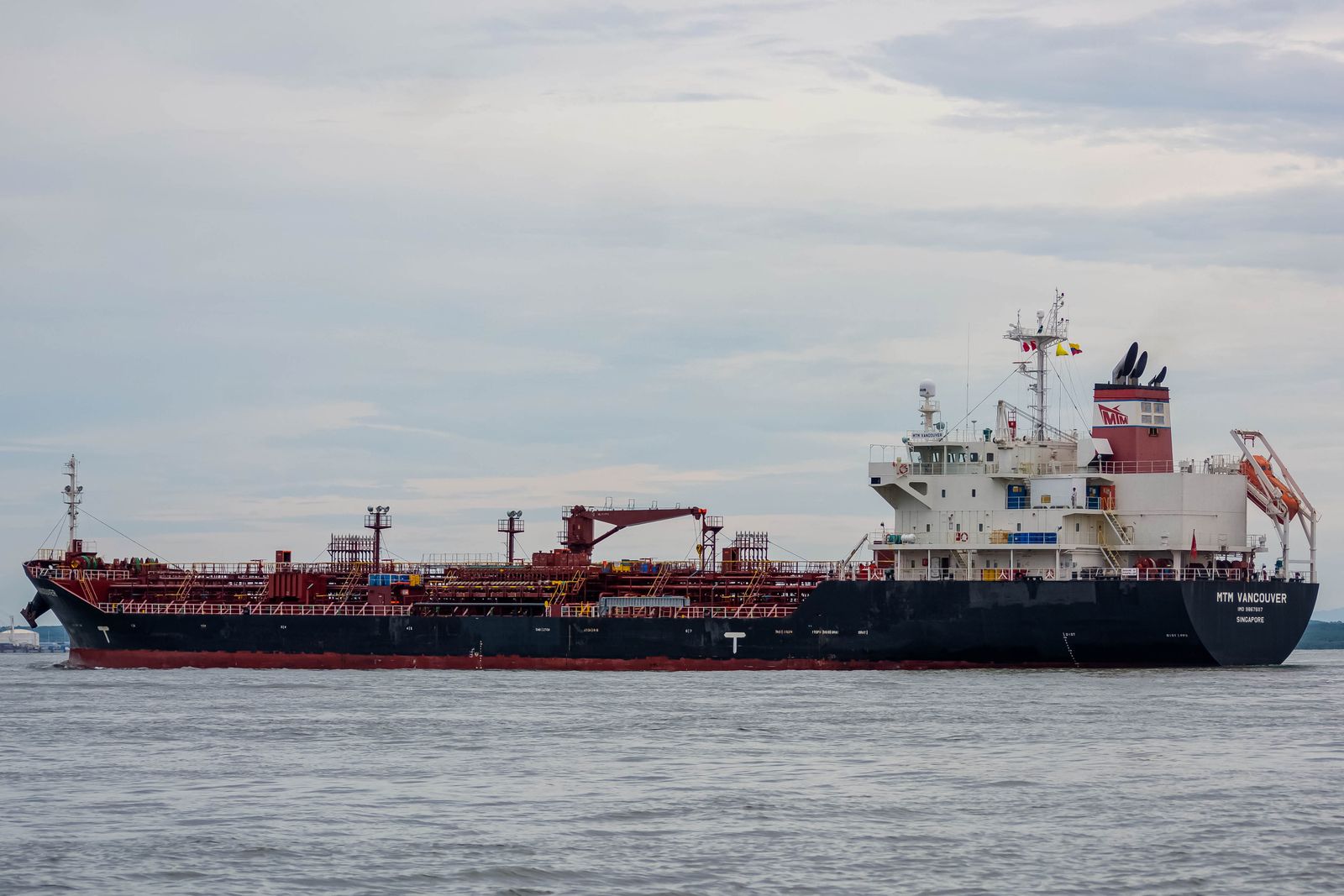
Reuters reported on 2 September that the Persian Gulf Strait Authority (PGSA) had added 11 vessels to a list first published on 24 August, taking the total number of blacklisted ships to 56. The listed vessels reportedly include crude tankers, LNG and LPG carriers and clean-product vessels.
The practical significance goes beyond the vessels named on the list. According to Reuters, the PGSA has also warned that ships cooperating with listed vessels, including through ship-to-ship transfers, could themselves face restrictions. That creates a potential contagion problem for counterparties: a ship that is not itself listed may still need to consider the trading history and recent operational relationships of vessels it is asked to interact with.
The blacklist is emerging at the same time that the United States has placed the PGSA itself under sanctions. On 27 May 2026, the US Treasury’s Office of Foreign Assets Control (OFAC) designated the PGSA under counterterrorism authorities, linking it to the Islamic Revolutionary Guard Corps. OFAC states that the entity was established in 2026 and identifies it as carrying secondary-sanctions risk.
A blacklist that can affect ships beyond the names published
The shipping concern is therefore not limited to whether a particular IMO number appears on an Iranian website. If cooperation with a listed vessel is itself treated by the PGSA as a basis for restriction, owners and charterers may need to examine the operational chain around a proposed fixture more closely than they would under a conventional sanctions-screening exercise.
Ship-to-ship activity is an obvious example. A tanker may be commercially acceptable under one sanctions regime but could still become exposed to an Iranian restriction because of an STS operation with another vessel. Similar questions can arise through bunkering, towage, agency services, cargo transfers or other forms of maritime assistance.
That does not mean the PGSA list should automatically be treated as equivalent to a recognised international sanctions list. It is a restriction asserted by Iran in the context of the current Hormuz conflict. But for a ship that physically needs to pass through the Strait, the operational consequences can still be real even if the legal status of the list is contested by other states.
US sanctions create a second and separate problem
The more difficult issue for international shipping companies is that responding to Iranian passage demands may itself create US sanctions exposure. OFAC’s FAQ 1249 states that payments to, or guarantees from, the Government of Iran or the IRGC for safe passage through Hormuz are not authorised for US persons. It also says that the prohibition is not limited to cash: receiving a service connected with a safe-passage guarantee can itself be prohibited even where no payment changes hands.
OFAC goes further in its guidance on the PGSA. The agency says that cooperating with or engaging in direct or indirect transactions or dealings with the designated authority, including receiving services from it, carries sanctions risk. For non-US persons, OFAC also warns of possible secondary-sanctions exposure where transactions involve the Government of Iran, the IRGC or other blocked persons.
The agency’s updated 24 August 2026 Hormuz sanctions alert warns maritime service providers to conduct enhanced due diligence on vessels seeking to transit the Strait, including asking counterparties who coordinated the transit and whether any safe-passage fees were or will be paid to Iran. The updated alert forms part of OFAC’s broader Iran sanctions guidance and should be read together with FAQ 1249 and the PGSA designation.
Why screening the vessel is no longer enough
Traditional maritime sanctions checks often begin with the vessel, its registered owner, beneficial owner, manager and charterer. The current Hormuz environment requires a wider factual inquiry. A ship may pass a conventional name-screening exercise but still have entered into an arrangement concerning passage, communication, services or coordination with an Iranian authority.
That matters to banks and insurers as much as to owners. A payment instruction, additional-premium reimbursement or invoice for a local service may look operationally routine but can carry a very different risk profile if it is connected to a designated Iranian entity. Counterparties that provide financing, insurance, broking or payment services may therefore require more information about how a Hormuz transit was arranged before they process a transaction.
The same issue can arise when a vessel is nominated under a charterparty. A charterer may consider a ship commercially suitable while the owner’s bank or insurer takes a more conservative view because of the vessel’s prior interactions, STS history or transit arrangements. That creates the potential for contractual disputes over nominations, replacement vessels and the costs of delay.
The operational problem is becoming harder as traffic falls
The blacklist also needs to be seen against the broader collapse in normal traffic through the Strait and the fresh series of security incidents affecting commercial vessels. Reuters reported on 11 September that only seven vessels transited on 10 September, compared with a 10-day average of 15 and a pre-war daily average of around 125 commercial vessels. Some vessels may be crossing with AIS transmissions disabled, but the available data still points to a dramatic reduction in normal commercial movement.
Lower traffic can increase the commercial pressure on companies to use vessels or arrangements they would otherwise avoid. Cargoes continue to move, freight markets still require tonnage and some trades have limited routing alternatives. That is precisely the environment in which sanctions and counterparty controls need to become more disciplined rather than more flexible.
What maritime companies should build into their Hormuz checks
For ships trading in or around the Gulf, due diligence should now cover more than the ordinary sanctions-screening pack. Companies should understand whether a vessel has appeared on the PGSA list, whether it has recently conducted STS or other cooperation with a listed vessel, who coordinated a proposed transit and whether any payment, service or guarantee has been requested in connection with safe passage.
Owners and managers should also separate master-level safety communications from broader commercial arrangements. A short VHF exchange necessary to avoid collision or respond to an immediate navigational instruction raises different issues from negotiating a safe-passage arrangement, accepting a service or making a payment. The factual line can be narrow, which is why clear internal instructions and escalation procedures matter.
For chartering teams, the continuing expansion of vessel restrictions is another reason to ensure that sanctions clauses and vessel-nomination provisions are drafted to address not only formal designations but also circumstances in which banks, insurers or competent authorities will not support a voyage. The more fragmented the regulatory environment becomes, the more valuable precise contractual allocation of that risk will be.
Sources
- Reuters, “Iran blacklists more ships trying to sail through Hormuz, govt website shows”, 2 September 2026.
- OFAC, Iran-related Designation; Counter Terrorism Designation, 27 May 2026.
- OFAC FAQ 1249 — payments and services relating to safe passage through the Strait of Hormuz.
- OFAC, updated “Sanctions Risks of Iranian Demands for Strait of Hormuz Passage” alert, 24 August 2026.
- Reuters, “Hormuz shipping traffic falls to single digits, data shows”, 11 September 2026.
Source note: Maritime Legal Business prepared this article from the public sources identified above. The Iranian blacklist is described on the basis of public reporting; MLB has not independently verified the contents or legal effect of the PGSA list. Sanctions consequences depend on the parties, conduct and applicable jurisdiction. This article is for general informational purposes and does not constitute legal advice.